2026 Mitsubishi Outlander PHEV First Drive: More Range, Better Handling, Same Family-Friendly Value
2026 Mitsubishi Outlander PHEV First Drive: More Range, Better Handling, Same Family-Friendly Value
Mitsubishi invited us to experience the updated 2026 Outlander PHEV in Vancouver, and the setting could not have been more appropriate. British Columbia delivered classic Pacific Northwest weather, with relentless rain and soaked mountain roads as we headed from the city toward Alouette Lake. In total, we covered about 63 kilometres in mixed driving on Yokohama BluEarth V906 winter tires. It quickly became clear that the updates for 2026 go beyond a simple spec-sheet refresh.

The most noticeable improvement is the way the vehicle drives. Mitsubishi retuned both the steering and suspension for 2026. The steering now feels more precise and better weighted, responding confidently when the road begins to twist. On the wet roads leading toward Alouette Lake, the Outlander felt planted and composed, inspiring confidence even in heavy rain. The calibration is surprisingly refined and, frankly, closer to what you would expect from a premium German SUV than from a plug-in hybrid in this price segment. Combined with Mitsubishi’s Super-All Wheel Control system, which distributes power through the electric rear motor, the vehicle maintains excellent stability and grip even when the weather is far from ideal.
2026 Mitsubishi Outlander PHEV
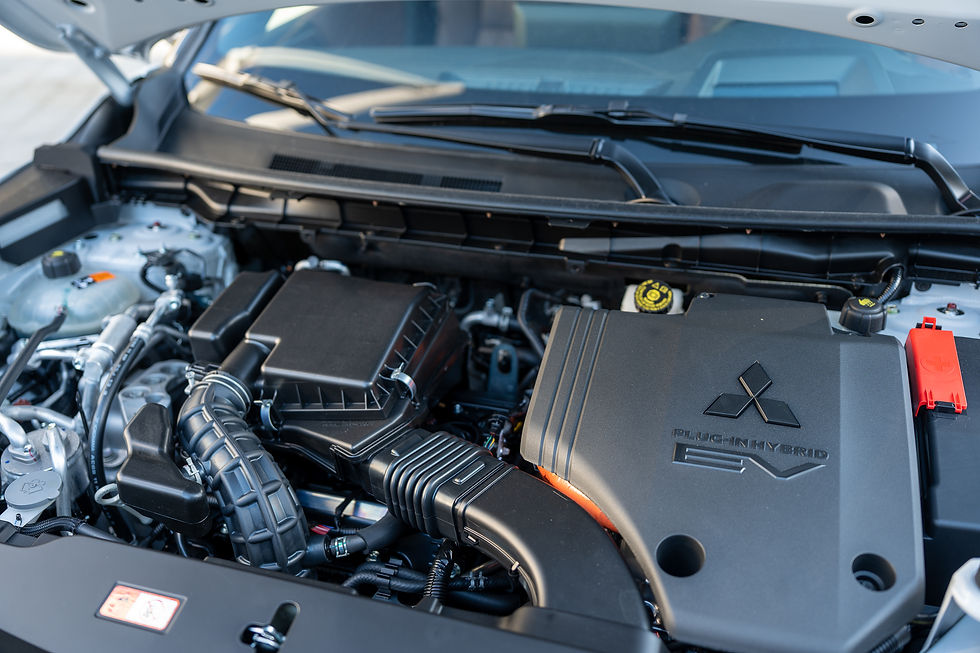
The Outlander PHEV has always stood apart from many other plug-in hybrids because it behaves more like an electric vehicle than a traditional hybrid. That character remains intact for 2026. Two electric motors power the vehicle, one at the front and one at the rear, while the gasoline engine frequently acts as a generator rather than the primary source of propulsion. The result is smooth, immediate torque and a driving experience that feels quiet and responsive in everyday conditions. Around town, it behaves much closer to a full EV than most vehicles wearing a PHEV badge.
For 2026, Mitsubishi increases the battery capacity to 22.7 kWh, up from 20 kWh in the previous model. This larger battery pushes the all-electric range to 72 kilometres, compared with 61 kilometres before. For many owners, that increase means daily commuting can be done entirely on electricity. System output also climbs to 297 horsepower, giving the Outlander noticeably stronger acceleration when merging or climbing hills.
Inside, the Outlander PHEV continues to punch above its weight in terms of quality and design. The interior already received a refresh on the gasoline Outlander, and those improvements now carry over here. Materials feel solid and thoughtfully selected, particularly in higher trims that offer semi-aniline leather and detailed stitching. The cabin manages to feel upscale without becoming overly complicated. Families will also appreciate a feature that remains rare among plug-in hybrid SUVs: a third row of seating. While it is best suited for shorter trips or younger passengers, having that extra flexibility can make a real difference for families on the go.

Another highlight inside the cabin is the new Yamaha audio system. Mitsubishi partnered with the renowned Japanese audio manufacturer to develop two dedicated sound systems for the Outlander lineup. The result is impressive. The system produces clear, detailed sound that easily rivals audio setups found in far more expensive vehicles. Combined with improved sound insulation, the cabin remains quiet and comfortable even at highway speeds.

The exterior updates for 2026 are subtle but effective. A revised front grille and bumper refresh the front end, while new 18- and 20-inch wheel designs add a more modern appearance. Updated rear taillights further refine the look. Mitsubishi also introduces a new Moonstone Grey Metallic paint that adds depth and a slight blue hue depending on lighting conditions. The Outlander remains bold without appearing overly aggressive, and the design continues to stand out in a crowded segment.

The Outlander PHEV can be charged using Level 1 or Level 2 charging, as well as DC fast charging through the CHAdeMO network. Level 2 charging takes roughly six and a half hours using the standard 3.6 kW onboard charger. This remains one of the few areas where we would like to see improvement in the future. A 7.2 kW onboard charger would reduce charging times significantly and better match what many competitors now offer. The vehicle also continues to use the CHAdeMO fast-charging connector, which is gradually disappearing in North America as CCS and NACS networks expand.

That said, Mitsubishi notes that most owners charge at home and rarely rely on fast charging. According to the company, roughly 68 percent of Outlander PHEV customers primarily use Level 1 charging, while about 30 percent use Level 2. In that context, the slower onboard charger may not be as significant an issue for typical owners as it might appear on paper. Pricing for the 2026 Outlander PHEV in Canada begins at $49,998 for the ES trim and climbs to $63,048 for the fully equipped Noir edition. At those prices, the Outlander PHEV continues to represent strong value. Few plug-in hybrid SUVs offer nearly 300 horsepower, standard all-wheel drive, over 70 kilometres of electric range and three rows of seating in the same package. Add Mitsubishi’s industry-leading warranty and included maintenance, and the overall value proposition becomes even stronger.

After spending time with the 2026 Outlander PHEV on wet roads around Vancouver and Alouette Lake, the biggest takeaway is that Mitsubishi focused on the right improvements. The larger battery increases real-world electric usability, and the additional power improves responsiveness, but the real highlight is the chassis refinement. The steering and suspension changes give the vehicle a level of polish and confidence that was not present before. Most importantly, the Outlander PHEV continues to offer something unique in this segment: a plug-in hybrid that genuinely drives like an electric vehicle. For the price, it remains one of the most compelling electrified family SUVs currently available.


Comments