2026 BMW i5 M60 Review: 1,620 km, 241 km/h, and 207 kW Charging
2026 BMW i5 M60 Review: 1,620 km, 241 km/h, and 207 kW Charging
Perfectly calibrated now
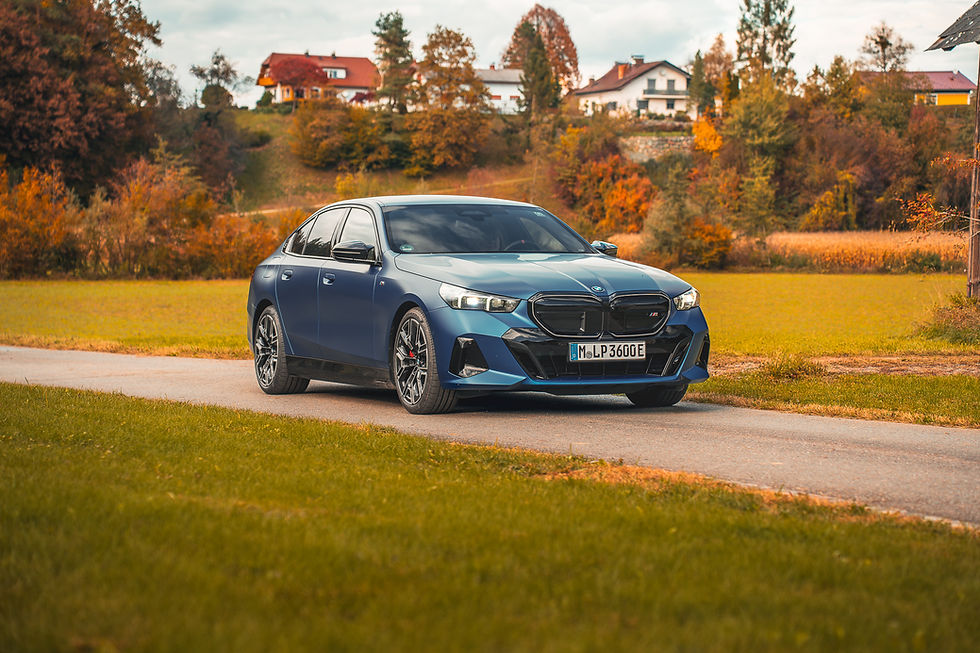
From the first few kilometres, the BMW i5 M60 feels like a preview of the next chapter. The car delivers enough performance and stability to suggest BMW has a future M5 in the pipeline and is keeping this model slightly restrained to leave room for something even more extreme. What you get today already sits close to that level. We proved it over a 1,000-kilometre loop from Munich to Graz and back. Our plan was simple. Drive fast. Cover real distance. Use the car the way families and frequent travellers actually use EVs in Europe. The i5 M60 handled the entire route without effort. We reached a verified 241 km/h on the Autobahn. We recorded a 207 kW peak charging session. We crossed mountain valleys, small towns, and long rural stretches without slowing down for the sake of efficiency. The car let us drive naturally, not cautiously. The trip confirmed something important about current EVs. You can cover long distances at real highway speeds and still live comfortably with the charging schedule. The i5 M60 never limited our pace or our plans. It stayed predictable, stable, and easy to use even when pushed. Strong infrastructure helped, especially the Meggenhofen charging park with its solar-powered canopy, 106 chargers, and large-scale energy storage, but the car’s own charging performance and high-speed stability made the entire loop straightforward. We kept the day practical. Drove when it made sense. Charged when needed. Stopped for schnitzel in Austria and for coffee everywhere else. Photographed when the weather allowed it. The goal was to experience how the i5 M60 behaved across a full day of varied driving, not in short, controlled segments.

Performance at Real Speeds
The i5 M60 delivers 593 horsepower and a strong hit of instant electric torque. Acceleration to 100 km/h takes just over three seconds, and the power continues well past typical highway speeds. The car reaches 200 km/h rapidly and remains composed beyond that point. At our verified 241 km/h run, the chassis felt stable, with no wandering or excessive correction needed. The car’s weight is noticeable on tighter roads, especially during quick transitions or slower manoeuvres. Once speeds rise, the mass works in the car’s favour, adding high-speed stability that benefits long European routes. The drivetrain remains consistent, with smooth power delivery even after extended periods of spirited driving.
Handling & Confidence
Adaptive suspension tuning gives the M60 a clear advantage over the standard i5. Body control stays tight without creating discomfort on longer days. The dampers respond quickly to surface changes, which is useful on Alpine roads where elevation and camber shift often. Steering is precise and predictable, allowing the car to be placed exactly where you want it. The width demands attention in narrow areas, but rear-axle steering reduces effort and improves manoeuvrability in tight parking garages and older town centres.
2026 BMW i5 M60
Energy Use & Real Range
On mountain descents, the braking system remains consistent and reassuring. Regenerative braking mitigates load on the physical components, while the M Sport brakes prove their worth during rapid transitions from high-speed Autobahn runs to sudden slowdowns in the hills, with pedal feel staying perfectly predictable throughout. This drive covered 1,620 kilometres and included unrestricted Autobahn sections, steady 120–130 km/h cruising, rural highways, and mountain terrain. The overall average landed at 27.9 kWh/100 km. Long stretches were driven well above typical EV-testing speeds, and the car spent real time at the top of its capability. On unrestricted Autobahn sections, consumption naturally climbed. Speeds above 200 km/h increase aerodynamic load rapidly, and any EV will show that. Even so, the numbers stayed controlled for a 593-hp sedan of this size. When we returned to normal Central European highway speeds, energy use settled. At 120–130 km/h, cruising produced lower and more stable figures. In towns and on slower connecting roads, regeneration reduced consumption again. You can plan for a realistic 350–420 km of range depending on how hard you drive. The WLTP figure sits higher, and the announced range in Canada is 447 km, but real-world numbers reflect weather, terrain, and speed. If you drive as most people do on a family road trip, you hit the higher end of that range and even go above it. If you enjoy the power, you hit the lower end.

Charging Performance & Infrastructure
During a fast-charging session, the M60 peaked at 207 kW, though its average was lower due to the expected tapering curve. Strong speeds are maintained until about 75% charge, resulting in charging stops often under 30 minutes. The most seamless stop was at Austria’s largest charging station, Meggenhofen, along the A8 highway. Its 106 charging points are covered by a solar canopy and supported by a 2.5 MW battery. The scale is impressive: rows of fast, reliable chargers under cover, with clean facilities and good lighting.
Interior & Long-Distance Comfort
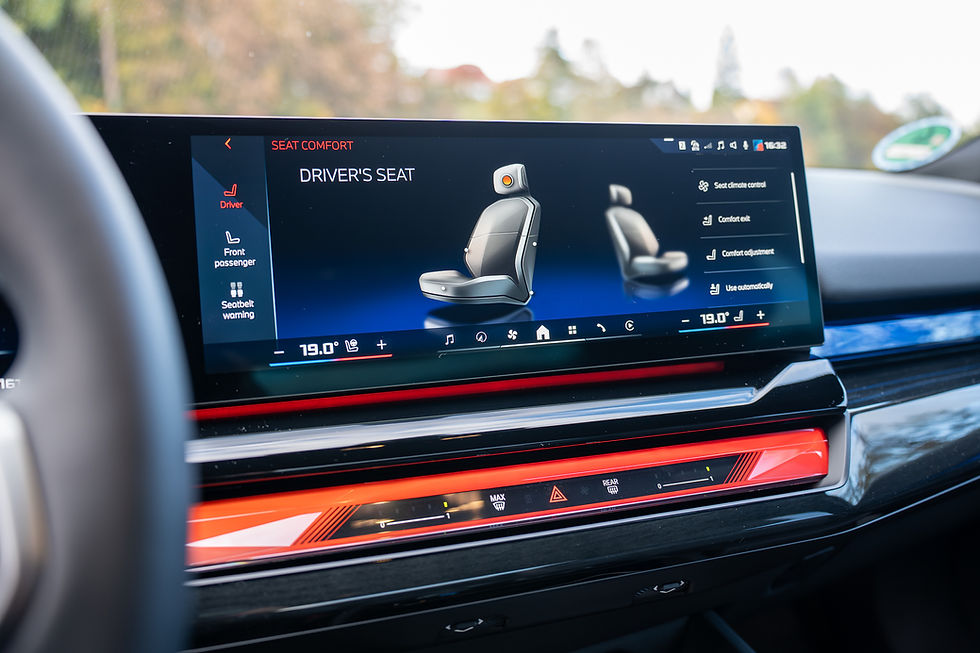
The cabin follows modern BMW design cues with a clean layout, a curved digital display, and solid materials throughout. Menus are straightforward once you learn the structure, and the interface responds quickly. Seat support is strong, which matters on long days when you remain behind the wheel for several hours. The driving position is natural, and visibility stays consistent in different environments. Cabin noise remains well controlled, even past 180 km/h. Wind noise stays minimal, and while road noise varies with pavement, it never becomes intrusive. This helps reduce fatigue during sustained Autobahn driving. Climate performance is stable, and temperature adjustments respond quickly, keeping the cabin comfortable regardless of changing weather or altitude. Rear-seat space accommodates adults comfortably. Legroom is generous, and headroom remains adequate even with the panoramic roof. The ride in the back stays settled on long stretches, and passengers benefit from the same noise control that helps in the front. The trunk provides enough room for luggage and photography gear. The sedan format limits vertical loading height, but most everyday items fit cleanly and without difficulty.

Technology & Driver Assistance
The iDrive interface feels responsive. You can use touch controls or the rotary controller. Navigation integrates charging planning. Traffic information updates quickly. The augmented-view option helps in small towns where lanes can split with little warning. Driver assistance systems help on longer highway stretches. Lane-keeping remains steady. Distance control adjusts smoothly. The system never feels intrusive. You stay in control, but the assistance reduces workload on monotonous sections.

Sound & Cabin Engagement
BMW equips the i5 M60 with IconicSounds Electric, and the result stands out in a segment where many premium EVs still struggle with artificial sound quality. The system provides several distinct profiles, each designed to match throttle input and driving mode. You hear a clean rising tone in Comfort, a deeper and more assertive profile in Sport, and sharper, quicker pulses when you activate Boost. The sound remains controlled, never distorted or intrusive. You can turn everything off if you prefer silence, but leaving it on adds real engagement. The tuning feels deliberate and refined, with none of the hollow or synthetic harshness found in some competitors. The system gives the i5 M60 a sense of mechanical presence that many electric performance sedans lack. Conversation remains easy at all times, and the sound never dominates the cabin. It simply enhances the drive in a way that fits the car’s performance focus.
Practicality for Families
The i5 M60 behaves like a 5 Series in daily use. The door openings are wide, the seating position feels familiar, and visibility remains good for a sedan of this size. You can use it for commuting, weekend road trips, and long stretches without changing your routine. The weight disappears after a day, and once you understand the turning radius with rear-axle steering, the size feels natural. Winter conditions reduce range, but traction stays strong. Power arrives quickly, and the control systems prevent wheelspin. Rear climate performance remains consistent, and rear passengers are comfortable during long stints. For families, the rear seats work better than expected. ISOFIX anchors are exposed and easy to reach, so installing child seats does not require digging between cushions. Most seats click in on the first try, and the top-tether points sit high and visible behind the headrests. A rear-facing seat fits without compromising front-row comfort, while a forward-facing seat secures cleanly thanks to the flat cushion base and wide door openings. Booster-seat belt access is straightforward, and children can buckle themselves without fighting the belt path. It all makes daily use easier and reduces the usual stress around child-seat installation.

Design & Touring Variant
Design remains subjective, but the proportions of the i5 M60 work well in person. The car sits long and low, with a lighting signature that gives it a clear identity at night. The M60’s black trim creates a cleaner and more focused look. It avoids the visual complexity seen on some EV competitors and fits naturally within the premium performance sedan segment. Europe also offers a Touring version of the i5, which adds meaningful practicality. The wagon format provides a larger loading opening, more usable cargo height, and better flexibility for families who carry strollers, luggage, or photography equipment. That version is not offered in North America at the moment. Canadian buyers looking for maximum space will need to choose the sedan or wait to see if BMW expands availability. The sedan still covers most daily needs, but the Touring would broaden the car’s role for long trips and larger families.

The Price of a Proper Performance EV
Pricing in Canada sits just below $100,000 before tax. The i5 M60 competes with premium performance EV sedans. You pay for performance, build quality, and a complete long-distance driving experience. Range is not class-leading, but the balance of performance, comfort, and usability is strong.
Final Thoughts
The BMW i5 M60 stands out because it handles real-world driving with confidence. It moves quickly. It charges quickly. It stays stable at high speed. It feels comfortable on long trips. The car fits a family that enjoys driving and wants an EV that behaves like a performance sedan, not a soft cruiser.
We finished the trip in Munich with the same impression we had when we started. The i5 M60 delivers a consistent driving experience. It never felt overwhelming. It never felt unpredictable. It delivered on the numbers and the feel. It gave us a full picture of what a modern performance EV can be in everyday use.

Disclaimer: BMW has lent us the vehicle as a press loan. We have no affiliation with BMW Canada. The above reflects our personal opinion of the cars referred to above.


Comments