2026 Hybrid SUV Comparison: Honda CR-V vs Hyundai Tucson vs Mazda CX-50 vs Subaru Forester

This comparison examines the hybrid variants of four popular compact SUVs from different manufacturers that have been recently introduced. We will evaluate their relative performance, features, and value to determine a top performer. In alphabetical order, we tested the Honda CR-V TrailSport Hybrid, Hyundai Tucson Ultimate Hybrid, Mazda CX-50 Hybrid GT and the Subaru Forester e-BOXER Hybrid Premier. Each vehicle as-tested falls within the price range of approximately $50,000 to $51,000. The models originate from different manufacturing locations: Canada, Korea, the United States, and Japan, respectively.

Honda CR-V TrailSport Hybrid
The sixth-generation Honda CR-V expands its hybrid availability for the 2026 model year to the TrailSport trim, now offered as a hybrid variant. While the current generation debuted in 2022, its design remains contemporary. Honda has made the hybrid powertrain widely accessible, offering it across four trim levels. The TrailSport features an Ash Green paint scheme complemented by black accents, black wheels, and distinctive orange badging, contributing to its rugged aesthetic. It is equipped with all-terrain tires, which provide a comfortable and settled ride without compromising refinement.
CR-V Hybrid
The interior is largely consistent with earlier model years, featuring fabric upholstery even at this price point. That said, these seats still offer notable comfort. The hybrid powertrain pairs a 2.0-liter Atkinson-cycle four-cylinder engine with two electric motors, generating a combined 204 horsepower and 247 lb-ft of torque. The system delivers smooth, ample power with a focus on efficiency rather than sporty performance. In real-world testing, the vehicle achieved a combined fuel consumption average of 7.0L/100km (33.6 mpg), a figure slightly above the official government rating of 6.7L/100km. Currently, a plug-in hybrid variant available in European markets is not offered in North America.
Hyundai Tucson Ultimate Hybrid
The Hyundai Tucson is a cornerstone of the brand's lineup, transitioning to a bold design language with its fourth generation. This iteration integrates distinctive daytime running lights into the grille for a prominent front fascia, while a light-grey rear bumper accent contributes to a taller, robust stance. Though its overall design has seen minimal changes since its debut, it retains a modern and distinctive appearance. Inside, the Tucson offers a roomy cabin refreshed in line with Hyundai's current design language, featuring returning physical buttons and column-mounted gear selection. Wireless Apple CarPlay and Android Auto are widely available. The tested Ultimate Hybrid trim includes amenities such as a panoramic sunroof, heated and ventilated front seats, and a head-up display. The interior comfortably accommodates four adults, with a fifth seating position available in the rear.

The hybrid powertrain pairs a turbocharged 1.6-liter four-cylinder engine with a 44-kW electric motor and a six-speed automatic transmission, producing a combined 231 horsepower and 258 lb-ft of torque. During sustained acceleration, the system relies more heavily on the internal combustion engine, which contributes 178 horsepower and 195 lb-ft of torque. Performance is capable, with a 0-100 km/h time of approximately 7.0 seconds, though the driving experience prioritizes comfort over sportiness, featuring light steering and a quiet cabin.
Hyundai Tucson Ultimate Hybrid
A key strength is its fuel efficiency. In testing, it achieved an average of 6.7L/100km (35 mpg), matching the official government rating. The Tucson hybrid is the only vehicle in its comparison group also offered as a plug-in hybrid, providing an estimated 51 km of electric range. Additionally, the standard hybrid variant offers one of the most affordable price points for a hybrid powertrain in its class.
Mazda CX-50 Hybrid GT
The Mazda CX-50 Hybrid is not an entirely new model, but it represents a significant update with the introduction of a hybrid powertrain to the existing platform. Its exterior design remains unchanged from the gasoline version, maintaining its bold stance and prominent grille. The primary visual identifiers are discrete "Hybrid" badges in blue, a subtle distinction that aligns with the vehicle's established, sleek appearance.

The interior is largely consistent with previous iterations, characterized by a user-friendly layout with physical buttons and a central control knob. A notable change is the replacement of the tachometer with a power meter in the instrument cluster. Unlike its competitors, the CX-50 does not feature a fully digital gauge cluster; a design choice that may appeal to buyers preferring traditional analog displays. The cabin offers ample space for passengers and cargo, ranking second in passenger room among its comparison group. It comfortably accommodates four adults, though the center rear position is less spacious. Practical features like easy car seat installation enhance its family-friendly utility.
Mazda CX-50 Hybrid
The hybrid powertrain differentiates the CX-50 from Mazda's typically spirited driving dynamics. It utilizes a 2.5-liter four-cylinder engine paired with three electric motors, a 1.59 kWh nickel-metal hydride battery, and an electronic continuously variable transmission (e-CVT). All versions feature standard electronic all-wheel drive (e-AWD). The system produces 219 horsepower and 163 lb-ft of torque, prioritizing efficiency over outright acceleration, with a 0-100 km/h time of approximately 7.6 seconds. This powertrain is shared with the Toyota RAV4 Hybrid, and both vehicles are assembled in the same Huntsville, AL, plant.
While not focused on performance, the CX-50 Hybrid maintains composed handling, with steering that offers more feedback than many rivals. Its primary strength is fuel efficiency; it achieved a test average of 6.0L/100km (39.2 mpg), the lowest consumption in its comparison group. Additionally, the CX-50 Hybrid holds a competitive advantage with the lowest starting price among the vehicles evaluated.

Subaru Forester Hybrid Premier
The latest Subaru Forester, now in its sixth generation, builds upon the model's squared-off, utilitarian design. This latest iteration features a larger front grille, increased body cladding for a more rugged aesthetic, and distinctive hybrid badging. As the top-tier Premier trim, this version also includes exclusive 19-inch aluminum wheels. The interior is well-appointed, featuring two-tone leather upholstery, heated and ventilated front seats, a 12.3-inch digital instrument cluster, and a premium Harman/Kardon sound system. Wireless smartphone integration is standard. One notable omission for the segment is a power-operated sunshade for the panoramic sunroof. Passenger space is adequate for four adults, with a fifth position available in the rear. The Forester excels in cargo capacity, offering 1,957 litres (779 litres with the rear seats upright).

On the road, the Hybrid Premier offers a quieter and more comfortable ride than its gasoline counterpart. Its powertrain combines a 2.5-liter BOXER engine with a 1.1 kWh lithium-ion battery and a hybrid continuously variable transmission, producing a total system output of 194 horsepower. Acceleration is linear from a stop, though the vehicle's added weight results in modest performance, with a 0-100 km/h time estimated at 8.7 seconds. Passing power diminishes at higher highway speeds. Standard Subaru all-wheel drive provides capable traction, while the suspension is tuned for comfort, effectively managing body roll. Fuel economy saw a significant improvement over the gasoline model, with a test average of 7.4L/100km (31.8 mpg). While this represents a meaningful efficiency gain, it remains higher than its direct hybrid competitors.
Subaru Forester
Final verdict
After extensive evaluation, each of these hybrid SUVs presents a distinct set of strengths and compromises, making them compelling options for buyers seeking improved fuel efficiency without transitioning to a fully electric vehicle.
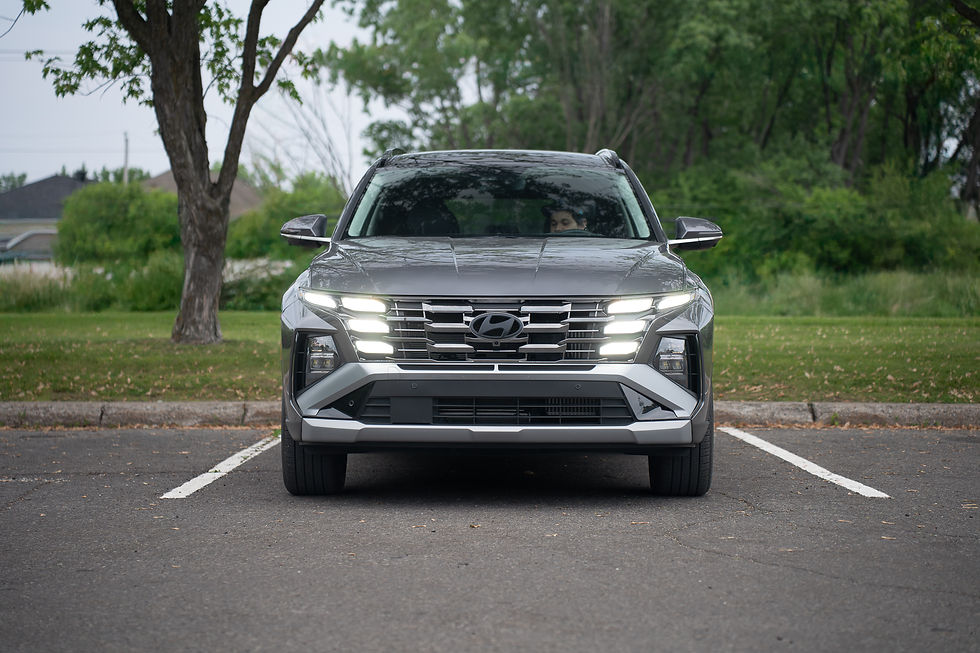
Based on a comprehensive assessment, the Hyundai Tucson Hybrid emerges as the preferred choice. Its advantages include the availability of a plug-in hybrid variant, a competitively priced entry-level trim, and strong cargo utility despite its compact exterior length.
The Mazda CX-50 Hybrid delivered the best fuel economy (6.0L/100km) and holds the lowest starting price. However, its more limited availability within the Canadian market ultimately impacted its ranking. The Honda CR-V Hybrid features a refined and capable powertrain, while the Subaru Forester Hybrid benefits from the brand's proven standard all-wheel-drive system. Both were ultimately edged out by their higher test-cycle fuel consumption figures, which each averaged over 7.0L/100km.
As our inaugural four-way comparison, your feedback on this format is valuable. We invite you to share your thoughts on social media as we plan future reviews.


Comments